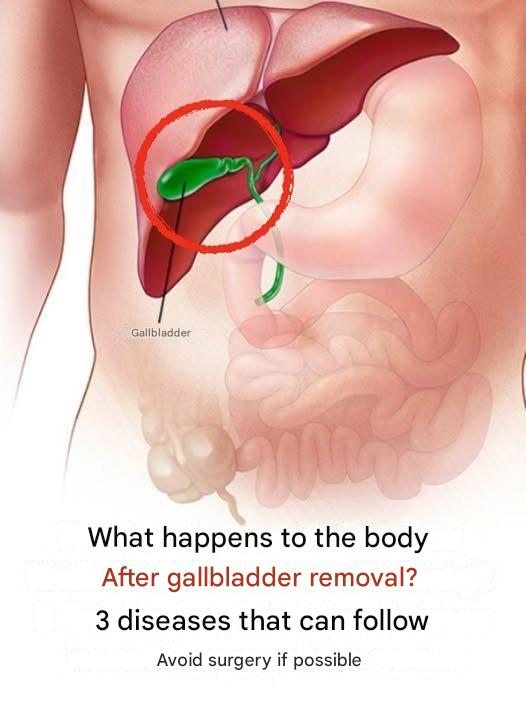
After gallbladder removal (cholecystectomy), your body still digests food—but in a slightly different way. The gallbladder’s job was to store and concentrate bile. Without it, bile flows directly from the liver into the small intestine in a steady trickle instead of being released in bursts after meals.
What changes in the body?
- Digestion still works: The liver keeps producing bile.
- Fat digestion may be less efficient at first: Some people experience temporary difficulty digesting fatty foods.
- Most people adapt: Over weeks to months, the digestive system adjusts.
3 Possible Complications
- Digestive issues (Postcholecystectomy syndrome)
- Bloating, gas, diarrhea, or indigestion
- Often triggered by fatty or spicy foods
- Usually mild and manageable with diet changes
- Bile acid diarrhea
- Continuous bile flow can irritate the intestines
- Leads to frequent loose stools in some people
- Can be treated with medications if persistent
- Injury or blockage in bile ducts
- Rare but more serious
- Can involve damage to bile ducts or retained stones
- Symptoms: severe pain, jaundice, fever
Most people live completely normal, healthy lives after surgery, with only minor or temporary changes. If symptoms persist or worsen, medical follow-up is important.
