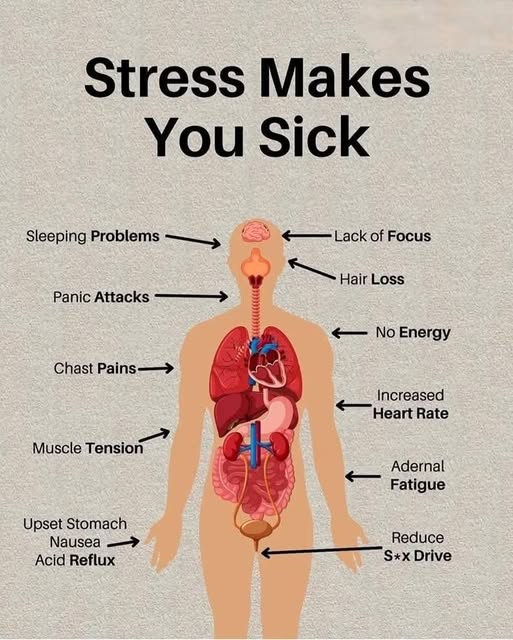
Stress is not just “feeling tense”—it’s a full-body response involving your brain, hormones, heart, and immune system. Short-term stress can help you perform under pressure, but chronic stress slowly affects health in multiple ways.
How stress affects your body
1. Heart and blood pressure
When you’re stressed, your body releases adrenaline and cortisol. This increases heart rate and blood pressure.
Over time, chronic stress can:
- Raise risk of hypertension
- Increase strain on the heart
- Contribute to chest tightness or palpitations
2. Brain and mental health
Stress affects brain chemistry, especially in areas linked to mood and memory.
It can lead to:
- Anxiety and irritability
- Difficulty concentrating (“brain fog”)
- Poor memory
- Higher risk of depression if prolonged
3. Sleep disruption
Stress keeps your nervous system “on alert.”
This may cause:
- Trouble falling asleep
- Waking up frequently
- Poor sleep quality → more fatigue during the day
4. Digestion problems
Stress directly affects the gut-brain connection.
It may cause:
- Acidity or heartburn
- Stomach cramps
- Constipation or diarrhea
- Reduced appetite or emotional eating
5. Immune system
Long-term stress weakens immune response.
This can lead to:
- More frequent infections
- Slower recovery from illness
- Increased inflammation in the body
6. Weight and metabolism
Stress hormones can:
- Increase cravings for sugar and fatty foods
- Promote belly fat storage
- Disrupt normal metabolism
Ways to manage stress effectively
1. Regular physical activity
Even 20–30 minutes of walking can:
- Lower cortisol levels
- Improve mood
- Help sleep quality
2. Controlled breathing techniques
Simple methods like:
- Deep breathing (4–4–6 pattern)
- Box breathing (4-4-4-4)
These activate the body’s relaxation system.
3. Better sleep routine
- Fixed sleep schedule
- Avoid screens 1 hour before bed
- Limit caffeine late in the day
Sleep is one of the strongest stress regulators.
4. Reduce overstimulation
- Limit social media scrolling
- Take short breaks during work
- Avoid multitasking overload
5. Healthy diet habits
- Reduce excessive caffeine and sugar
- Eat balanced meals with protein and fiber
- Stay hydrated
6. Talk it out
- Friends or family support
- Journaling thoughts
- Professional counseling if needed
Talking reduces mental load significantly.
7. Mindfulness or relaxation practices
- Meditation
- Prayer or spiritual practices (if meaningful to you)
- Listening to calming music
These help reset the nervous system.
Bottom line
Stress is normal, but chronic stress affects nearly every system in the body—from heart to digestion to immunity. The goal is not to eliminate stress completely, but to manage it so it doesn’t stay “switched on” all the time.
If you want, I can also give you a simple daily anti-stress routine (10–15 minutes) or explain how stress specifically affects blood pressure and heart health.
