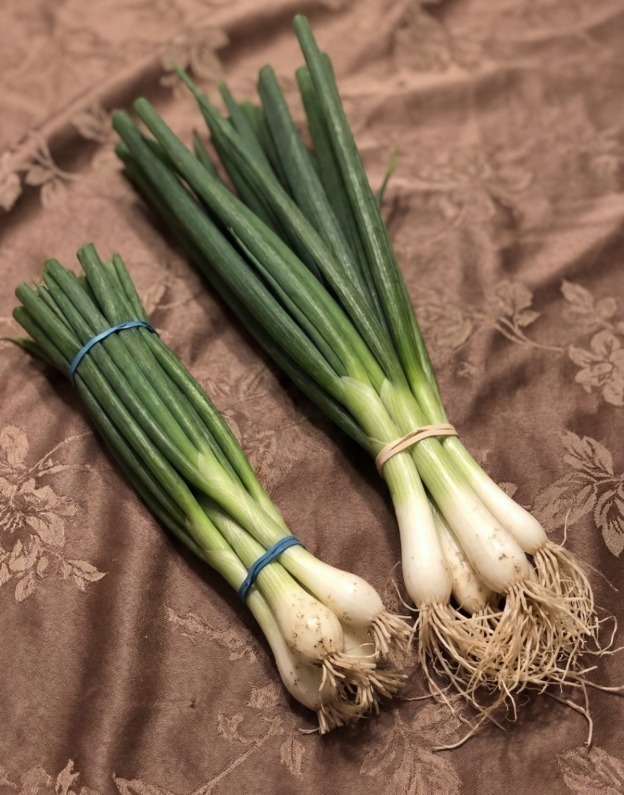
Here’s a clear breakdown of green onions, scallions, spring onions, and chives, which are often confused because they look similar:
1. Green Onions / Scallions
- Appearance: Long green stalks with a small, pale white bulb.
- Taste: Mild onion flavor, both the white and green parts are edible.
- Use: Raw in salads, garnishes, stir-fries, soups.
- Note: Green onion and scallion are often used interchangeably.
2. Spring Onions
- Appearance: Larger, rounder white bulb at the base; green tops like scallions.
- Taste: Slightly stronger and sweeter than green onions.
- Use: Good for roasting, grilling, sautéing, or adding a more pronounced onion flavor.
- Difference: The bulb is more developed, and flavor is stronger than scallions.
3. Chives
- Appearance: Very thin, hollow, grass-like green stalks; no noticeable bulb.
- Taste: Delicate, mild onion-garlic flavor.
- Use: Best raw, sprinkled on baked potatoes, omelets, soups, or salads.
- Difference: Much milder and purely used for garnish or subtle flavor, not cooking like onions.
Quick Comparison Table
| Type | Bulb Size | Green Part | Flavor Strength | Best Use |
|---|---|---|---|---|
| Green Onion / Scallion | Small | Yes | Mild | Raw, stir-fries, garnishes |
| Spring Onion | Larger | Yes | Medium-sweet | Roasting, sautéing, stronger flavor |
| Chives | Tiny / none | Yes | Very mild | Garnish, raw use |
💡 Tip: If a recipe calls for scallions and you only have chives, the flavor will be much milder. Spring onions can usually replace green onions if you want a stronger flavor.
If you want, I can make a visual guide showing all four side by side, so you can instantly tell them apart at the store — it’s really handy for cooking.
Do you want me to do that?
