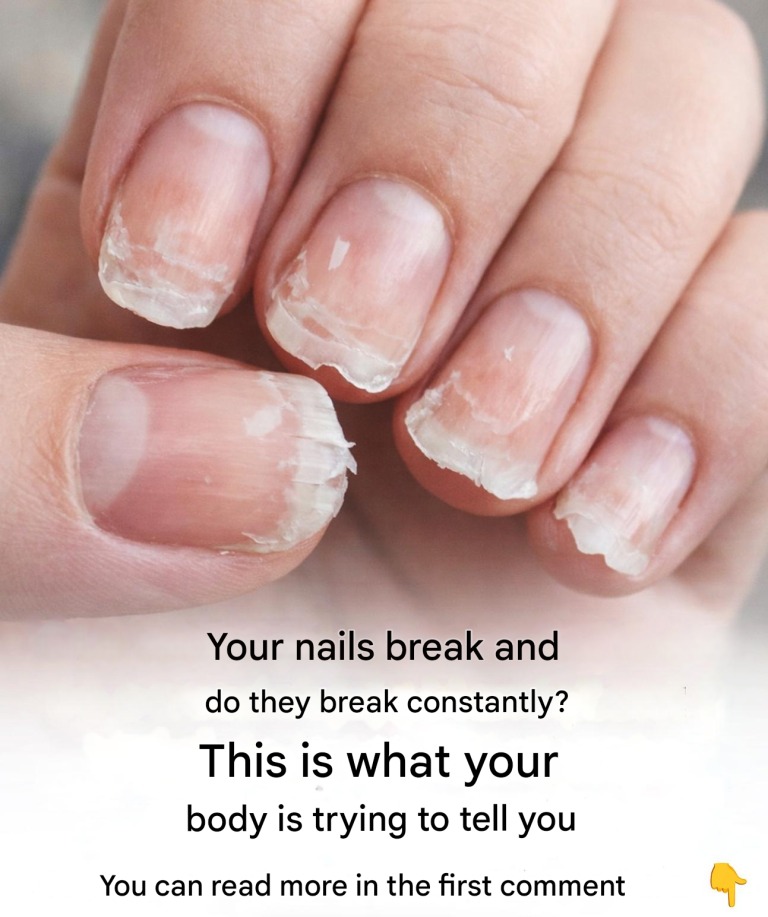
Brittle or fragile nails aren’t your body sending a mysterious “signal”—but they can reflect a mix of everyday habits and, sometimes, underlying issues.
What’s most common (and often overlooked)
- Repeated water exposure (washing, cleaning, detergents) dries nails out
- Harsh chemicals (nail polish removers, cleaners) weaken the nail plate
- Aging naturally reduces moisture in nails
- Frequent manicures or gel/acrylics can make nails thin and fragile
In many cases, this is just wear-and-tear—not a health problem.
Possible nutritional links
Certain deficiencies can contribute:
- Iron deficiency → can cause thin, spoon-shaped nails (linked to iron deficiency anemia)
- Low biotin or protein intake → may weaken nail structure
- Zinc deficiency → can affect nail growth and strength
That said, deficiencies are not the most common cause unless there are other symptoms (fatigue, hair loss, etc.).
Health conditions sometimes involved
Brittle nails can occasionally be associated with:
- hypothyroidism (slow metabolism, dry skin, fatigue)
- psoriasis (pitting, thickening, discoloration)
- Chronic dehydration or circulation issues
When to pay attention
Consider looking deeper if:
- Nails are suddenly changing without a clear reason
- You also have fatigue, hair thinning, or pale skin
- Nails are splitting severely or painfully
What actually helps
- Keep nails moisturized (cuticle oil, hand creams)
- Limit harsh chemicals and overuse of removers
- Wear gloves for cleaning
- Eat a balanced diet with enough protein, iron, and micronutrients
Bottom line: brittle nails are usually about external damage or dryness—not a dramatic warning sign. But if they come with other symptoms, they can be a clue worth checking out.
