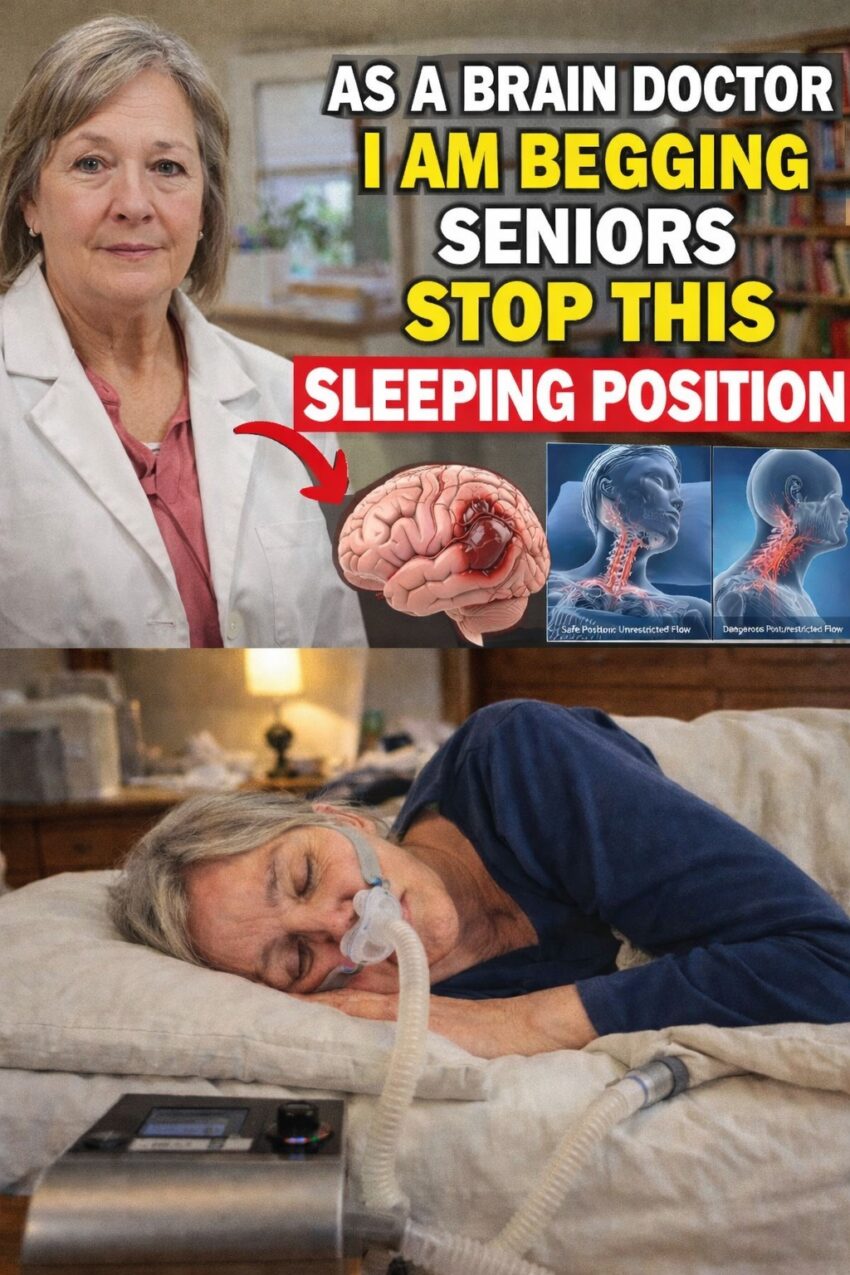
That headline is misleading. There isn’t a single “dangerous sleeping position” that suddenly causes strokes overnight. What is true is more subtle—and much less dramatic.
Here’s the reality based on actual medical evidence:
🧠 Does sleep position affect stroke risk?
Indirectly, yes—but not in the way those videos claim.
The main link is through a condition called Obstructive sleep apnea:
- Sleeping on your back (supine position) can make sleep apnea worse
- Sleep apnea is a known risk factor for stroke
- That’s where the connection comes from—not the position itself (www.heart.org)
👉 In simple terms:
Back sleeping → worsens breathing problems → increases long-term stroke risk (in some people)
😴 What about “stroke happening overnight”?
Yes, strokes during sleep (called “wake-up strokes”) are real:
- Around 20–30% of strokes happen during sleep (Healthline)
- But they’re linked to things like:
- High blood pressure
- Heart rhythm issues
- Sleep apnea
Not because of a specific sleeping posture.
⚠️ What actually increases stroke risk (sleep-related)
These matter far more than position:
- Poor sleep quality or disrupted sleep
- Too little or too much sleep
- Irregular sleep schedule
- Untreated sleep apnea
(Harvard Health)
🛏️ So… is any position “dangerous”?
- Back sleeping: can worsen sleep apnea in some people
- Side sleeping: often better for breathing
- Stomach sleeping: can strain neck, but no strong stroke link
There’s no solid evidence that one position directly “cuts off blood flow to the brain” in healthy people (despite what viral videos claim).
🧾 Bottom line
- The claim “this position raises stroke risk overnight” is overhyped and misleading
- Sleep position matters mainly if you have breathing issues like sleep apnea
- Your overall sleep quality and health conditions matter much more
If you want, tell me how you usually sleep (back, side, stomach), and I can give you a realistic take on whether it’s actually a concern for you.
