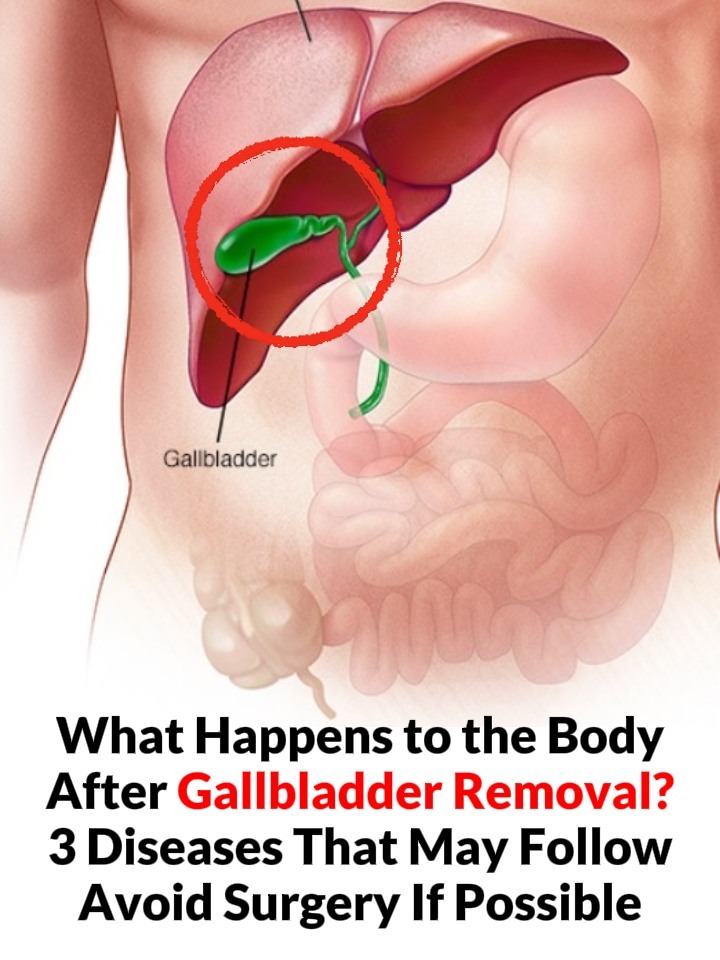
Gallbladder removal (called Cholecystectomy) is a common and often necessary procedure—but it does change how your digestive system works. The claim that you should “avoid surgery if possible” is partly true but context matters: if you have severe symptoms or complications, delaying surgery can be risky.
Let’s break this down clearly and realistically.
What happens to your body after gallbladder removal?
The gallbladder stores bile and releases it in bursts when you eat fatty foods. After removal:
- Bile flows continuously from the liver into the intestines
- Fat digestion becomes less efficient (especially at once)
- Your body usually adapts over time
Common effects
- Mild diarrhea or loose stools
- Bloating or gas
- Difficulty tolerating very fatty meals
Most people recover and live normally within weeks to months.
3 conditions that may develop afterward
These don’t happen to everyone, but they are known possibilities:
1. Postcholecystectomy syndrome
A collection of symptoms that can include:
- Abdominal pain
- Indigestion
- Diarrhea
It can occur soon after surgery or even months later.
2. Bile reflux
Without the gallbladder regulating bile release:
- Bile may flow backward into the stomach
- Causes burning, nausea, and irritation
3. Nonalcoholic fatty liver disease (possible association)
Some studies suggest:
- Changes in bile metabolism may affect fat processing
- Could contribute to fat buildup in the liver over time
(Important: this is influenced heavily by diet, weight, and lifestyle—not just surgery.)
Should you avoid surgery?
Not always. In fact, avoiding it can be dangerous in certain cases.
Surgery is usually recommended if you have:
- Frequent gallstone attacks
- Infection (Cholecystitis)
- Blocked bile ducts
- Pancreatitis caused by gallstones
Delaying surgery in these cases can lead to serious complications.
When you might try alternatives first
If symptoms are mild, doctors may suggest:
- Low-fat diet
- Weight management
- Monitoring gallstones
But these don’t remove stones—they just reduce symptoms.
Bottom line
- Life without a gallbladder is usually normal and manageable
- Some digestive changes are expected
- A few conditions can develop, but they’re not guaranteed
- Surgery should be based on medical need—not fear
If you want, I can help you decide whether surgery is avoidable in your specific situation—just tell me your symptoms or diagnosis.
