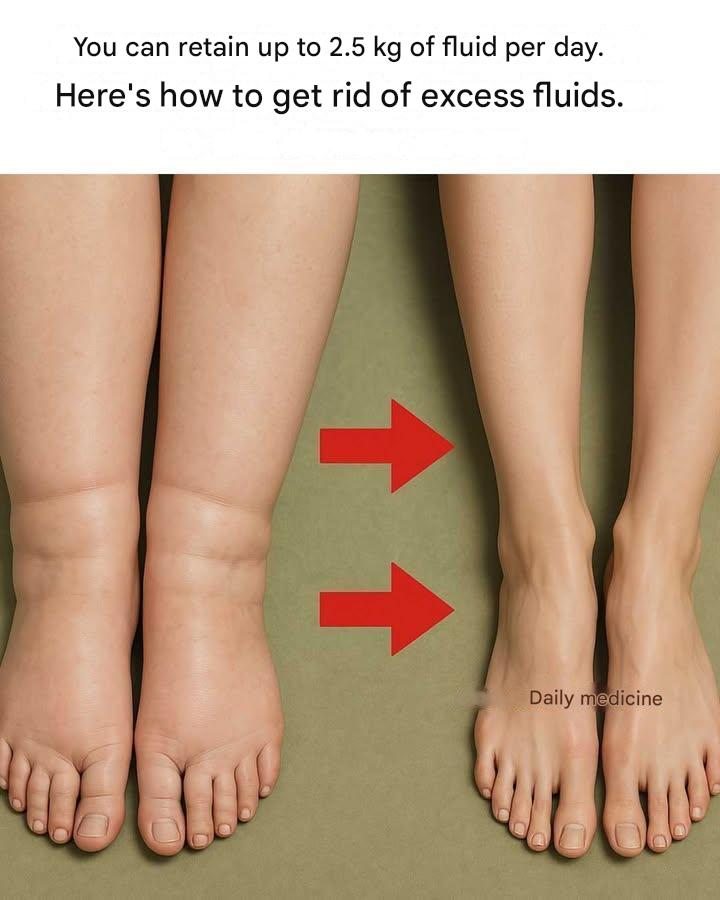
That claim is exaggerated. Your body can hold onto extra fluid, but “2.5 kg per day” isn’t a normal, everyday scenario. Rapid gains like that usually point to a specific issue—high salt intake, hormonal shifts, certain medications, or a medical condition—not something everyone experiences daily.
Let’s put this on solid ground.
🧠 What “fluid retention” actually is
Fluid retention (called Edema) happens when excess fluid collects in tissues—often in the legs, ankles, or abdomen.
⚠️ When large fluid shifts happen
Significant, quick weight gain from fluid can occur with:
- Very salty meals
- Long periods of sitting or standing
- Hormonal changes
- Conditions like Heart failure, Kidney disease, or Liver disease
But for most healthy people, day-to-day fluctuations are much smaller.
💧 Practical ways to reduce mild fluid retention
🧂 1. Reduce excess salt (most important)
High sodium makes your body hold water.
- Cut back on processed and packaged foods
- Taste food before adding extra salt
🚶 2. Keep moving
Sitting too long lets fluid pool in the legs.
- Walk regularly
- Flex ankles and legs if sitting for long periods
🥤 3. Stay hydrated
It sounds counterintuitive, but not drinking enough water can worsen retention.
🥗 4. Eat potassium-rich foods
Potassium helps balance sodium levels:
- Bananas
- Spinach
- Lentils
🛌 5. Elevate your legs
If swelling is in the lower body, raising your legs can help fluid return to circulation.
💊 About “quick fixes”
Be cautious with:
- “Detox drinks”
- Random diuretics or herbal teas
These can disrupt your electrolyte balance if overused.
🚨 When to take it seriously
Get medical advice if you notice:
- Sudden swelling in one leg
- Shortness of breath
- Rapid weight gain over a few days
- Persistent swelling
🧾 Bottom line
- Daily 2.5 kg fluid swings are not typical for healthy individuals
- Mild fluid retention is common and manageable
- Big or sudden changes deserve attention—not quick internet fixes
If you want, tell me where you notice swelling (face, legs, abdomen), and I can help narrow down the most likely cause and what to do next.
