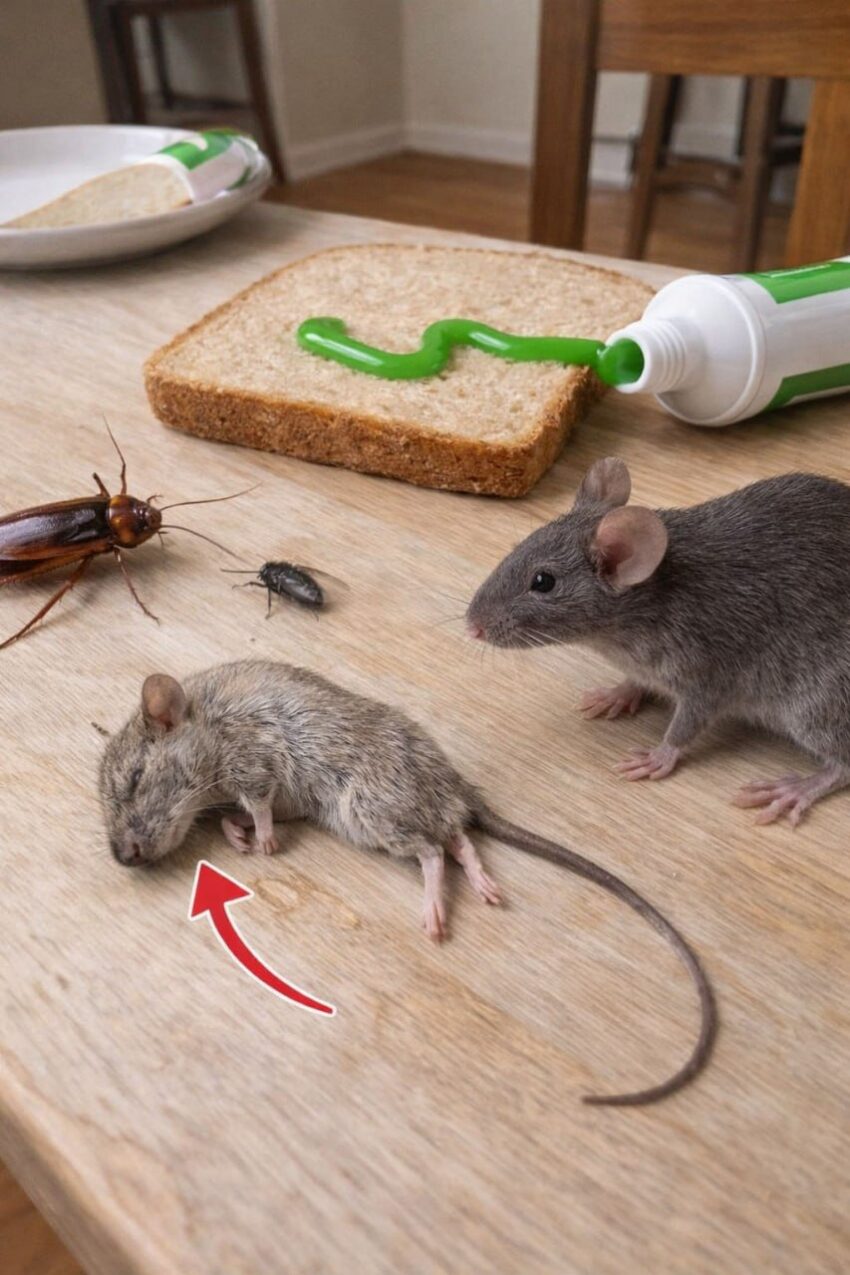
Short answer: not in any reliable or meaningful way.
Mint toothpaste gets promoted online as a “natural pest repellent,” but the evidence is very weak.
Why people think it works
Mint toothpaste often contains strong-smelling compounds like menthol (from mint oils). Some insects and rodents do avoid strong odors temporarily, so the idea sounds plausible.
What it can actually do 🪥
- The smell may briefly mask scents that attract ants or small insects
- It might discourage pests from crossing a treated spot for a short time
- It can give a mild “clean barrier” feeling in small indoor areas
What it does not do ❌
- It does not kill pests
- It does not stop infestations
- It does not replace real repellents or pest control methods
- It wears off quickly as the scent fades
So for something like ants, it may interrupt movement briefly—but they usually return once the smell disappears.
More effective natural options 🌿
If you’re dealing with common household pests:
- Peppermint essential oil (much stronger than toothpaste) can deter some insects short-term
- Vinegar + water for cleaning scent trails (especially ants)
- Sealing entry points + proper cleaning → the real long-term solution
For persistent issues (cockroaches, termites, rodents), you’ll need proper traps or professional treatment—not toothpaste tricks.
Bottom line
Mint toothpaste is not a practical pest repellent—it’s more of a temporary scent distraction than a solution.
If you tell me what pest you’re dealing with, I can suggest what actually works for that specific one.
