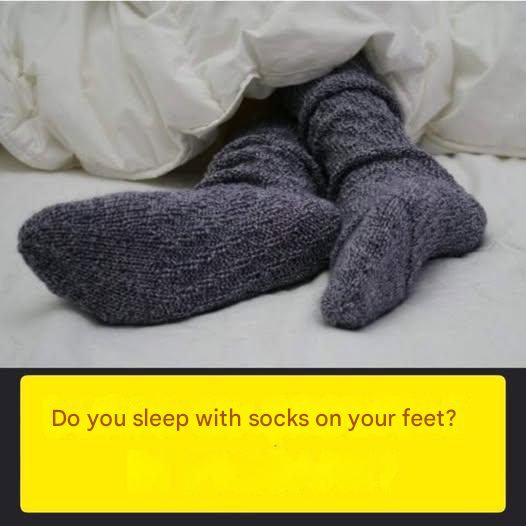
Sleeping in socks isn’t harmful—in fact, there’s some real science behind why people say it can be beneficial. But the claims online are often exaggerated.
What actually happens:
1. You may fall asleep faster
Wearing socks warms your feet, which causes blood vessels to widen (a process called Vasodilation). This helps your body lower its core temperature—a key signal that it’s time to sleep. Studies suggest this can help you drift off more quickly.
2. Potentially better sleep quality
When your body regulates temperature more efficiently, you’re less likely to wake up from feeling too cold. That can lead to more stable, uninterrupted sleep.
3. Fewer nighttime awakenings from cold feet
If your feet tend to get cold (common in older adults or people with poor circulation), socks can prevent that discomfort.
Other possible benefits (less strongly proven):
- May help with mild circulation issues (like cold extremities)
- Some people report fewer symptoms of Raynaud’s disease, where fingers and toes get very cold
But there are a few downsides:
- Wearing tight or unclean socks can irritate skin or reduce comfort
- If you overheat easily, socks might actually disrupt sleep
- Poor hygiene (e.g., sweaty socks) could increase risk of fungal issues over time
Bottom line:
Sleeping in socks can genuinely help with falling asleep and staying comfortable, mainly through temperature regulation. It’s not a miracle health hack—but it’s a simple, harmless habit that works for some people.
If you want, I can explain why body temperature matters so much for sleep—it’s a pretty interesting system.
