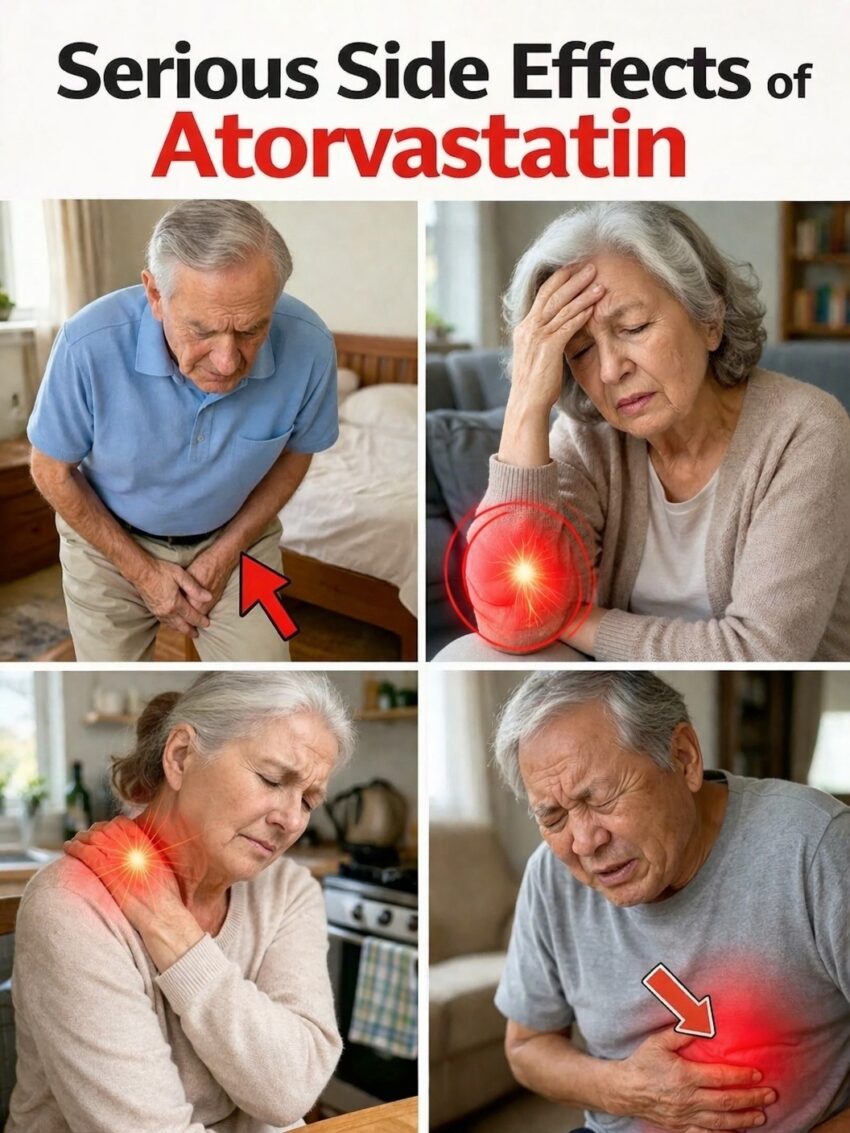
The headline you’re quoting—“15 hidden dangers your doctor might not tell you”—is typical of sensational health content. It exaggerates risk and often mixes real, known side effects with rare, unproven, or misattributed effects.
Let’s break down Atorvastatin in a clear, evidence-based way.
First: what atorvastatin actually is
Atorvastatin is a statin medication used to:
- Lower LDL (“bad”) cholesterol
- Reduce risk of heart attack and stroke
- Stabilize plaque in arteries
It is one of the most widely studied cardiovascular drugs in the world.
Common side effects (real but usually mild)
These can happen in some people:
- Muscle aches or stiffness
- Mild fatigue
- Headache
- Digestive issues (nausea, bloating)
- Slight increase in liver enzymes (usually reversible)
Most people either have no symptoms or mild ones that improve over time.
Less common but important side effects
These are real but occur in a small percentage of users:
- Significant muscle injury (rare)
Severe muscle breakdown (rhabdomyolysis) is very rare but serious. - Liver inflammation (rare)
Usually detected through blood tests before symptoms appear. - Increased blood sugar levels
Slightly higher risk of developing type 2 diabetes in predisposed individuals. - Memory complaints (controversial)
Some reports exist, but large studies have not confirmed consistent long-term cognitive harm.
“Hidden dangers” often claimed online (mostly misleading)
Here’s where internet lists usually go wrong:
❌ “Statins destroy your body”
Not supported by clinical evidence. Serious organ damage is rare.
❌ “Everyone gets severe muscle loss”
Most muscle pain reports are mild and reversible; true muscle injury is rare.
❌ “They secretly damage your brain”
Large studies do not show a strong link to dementia or major cognitive decline.
❌ “Doctors hide the truth”
Side effects are well documented in prescribing guidelines and discussed in medical practice.
Important reality check
The key risk question is not “Does atorvastatin have side effects?”
It’s:
Do the cardiovascular benefits outweigh the risks for this person?
For many people at moderate to high risk of heart disease, the answer is yes—often significantly.
Who should be more cautious
Doctors may monitor more closely if you have:
- Liver disease
- History of muscle disorders
- Heavy alcohol use
- Drug interactions (certain antibiotics, antifungals, etc.)
Bottom line
- Atorvastatin is not risk-free, but it is well-studied and generally safe
- Serious side effects are rare
- Most “hidden danger” lists online are dramatically exaggerated or misleading
- The real decision depends on your personal heart risk profile
If you want, I can also break down:
- statins vs natural cholesterol lowering (diet/exercise)
- or how to tell if muscle pain is actually from statins
- or whether statins are lifelong or can be stopped safely in some cases
