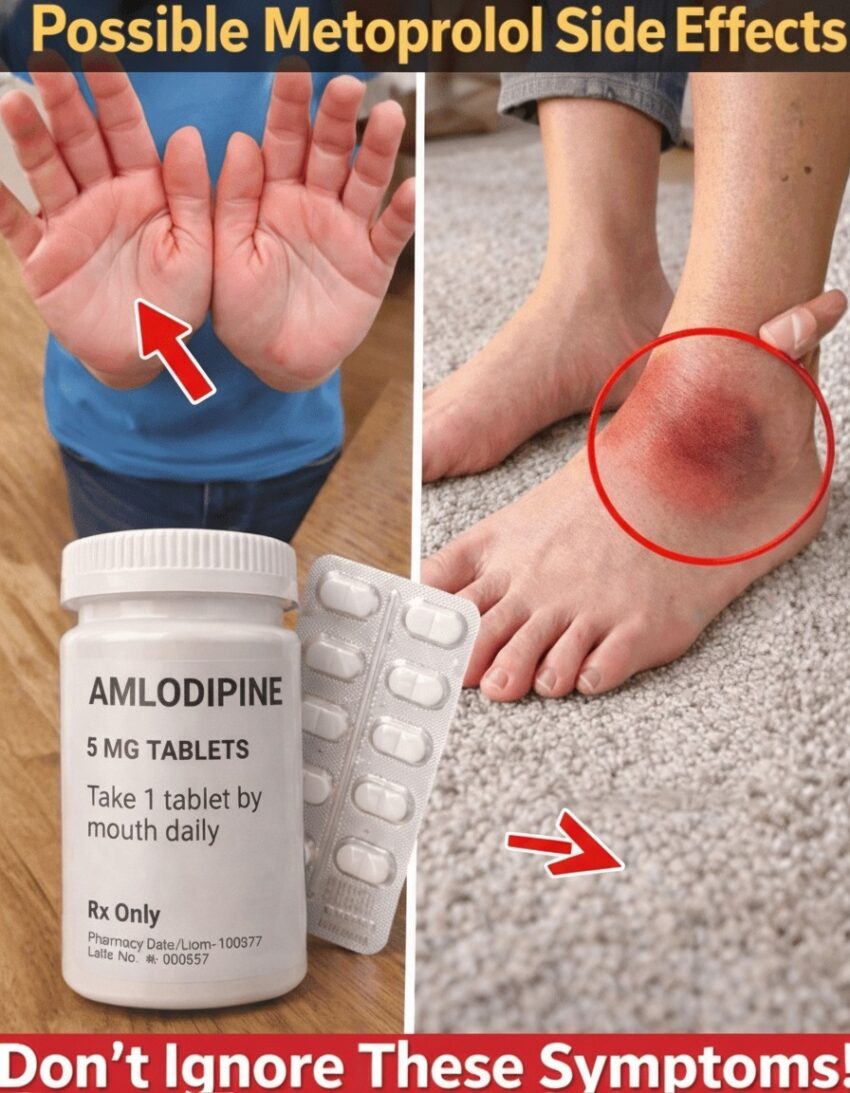
Here’s the straight, no-hype overview of Metoprolol—what side effects to watch for and when to call your doctor.
🧠 What metoprolol does
It’s a beta-blocker that slows your heart and lowers blood pressure. It’s commonly prescribed for:
- High blood pressure
- Heart rhythm problems
- Chest pain (angina)
- After heart attacks
⚠️ 10 Side Effects You Might Notice
😴 1. Fatigue
Very common—your heart is working more slowly.
💫 2. Dizziness or lightheadedness
Especially when standing up (due to lower blood pressure).
💓 3. Slow heart rate
Called bradycardia—sometimes too slow.
❄️ 4. Cold hands and feet
Reduced circulation can cause this.
😮💨 5. Shortness of breath
More likely if you have asthma or lung issues.
😕 6. Mood changes
Some people report low mood or mild depression.
🤢 7. Nausea or stomach upset
Usually mild and temporary.
⚖️ 8. Weight gain
Can happen gradually in some people.
🩸 9. Masked low blood sugar
Important if you have Diabetes—it can hide signs of Hypoglycemia.
❤️ 10. Sexual dysfunction
Lower libido or performance issues may occur.
🚨 When to call your doctor ASAP
Don’t ignore these symptoms:
- Fainting or near-fainting
- Very slow pulse (e.g., <50 bpm with symptoms)
- Severe dizziness
- Shortness of breath that’s new or worsening
- Swelling in legs/ankles
- Chest pain
👉 These could signal serious complications.
❗ Critical safety warning
Never stop metoprolol suddenly.
Stopping abruptly can lead to:
- Dangerous spikes in blood pressure
- Increased risk of heart attack
Always taper under medical guidance.
🧾 Bottom line
Metoprolol is widely used and often very effective—but like any medication, it has side effects. Most are mild, but a few require quick medical attention.
If you want, I can help you figure out:
- Whether a symptom you’re having is likely from metoprolol
- Or how to safely manage side effects without stopping the medication
