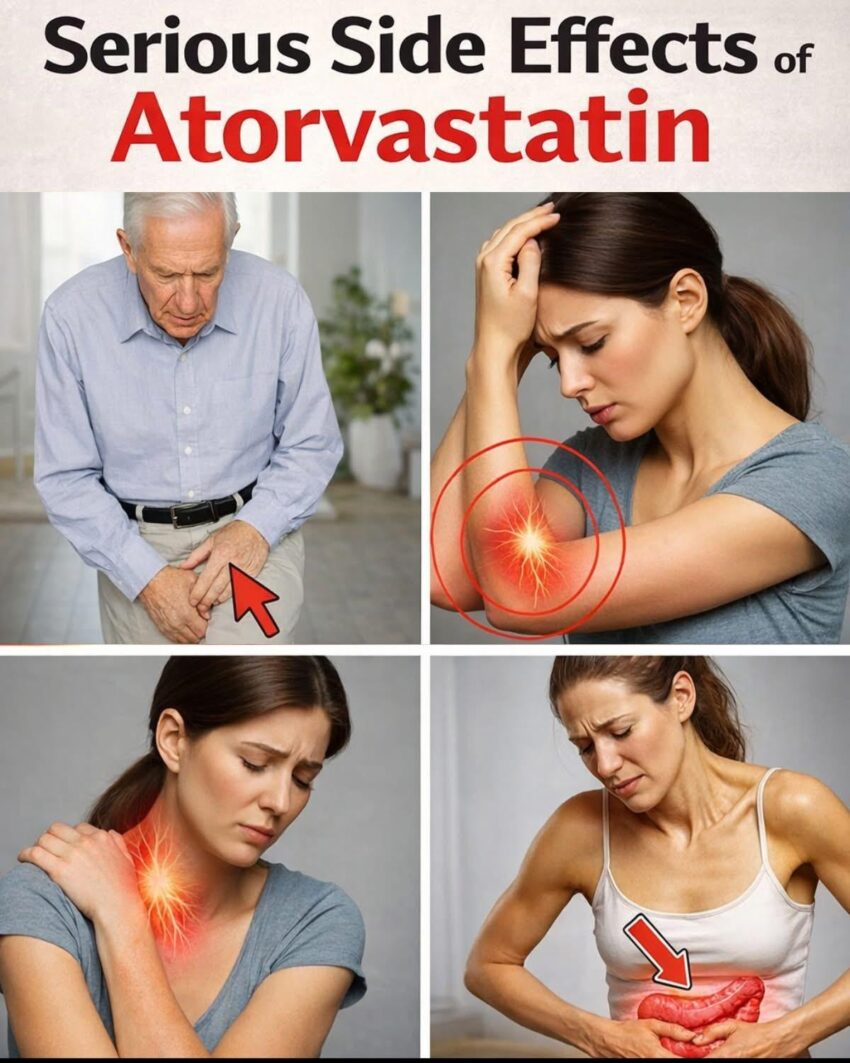
That headline is designed to grab attention. Atorvastatin (a commonly prescribed statin for lowering cholesterol) is generally well-studied and safe for most people — but like any medication, it can have side effects.
Here’s a balanced, evidence-based look at less commonly discussed side effects and what you can realistically do about them.
1. Muscle aches (myalgia)
Most common concern.
What to do: Tell your doctor — dose adjustment, switching statins, or checking vitamin D may help.
2. Muscle weakness or rare severe muscle injury (rhabdomyolysis)
Rare but serious.
What to do: Seek medical care urgently if you have severe muscle pain, dark urine, or extreme weakness.
3. Mild liver enzyme elevations
Usually detected on blood tests.
What to do: Routine monitoring as advised; avoid heavy alcohol use.
4. Increased blood sugar
Statins can slightly raise blood sugar and may unmask diabetes in high-risk people.
What to do: Monitor glucose if you’re prediabetic; prioritize diet and exercise.
5. Digestive issues
Nausea, gas, constipation, or diarrhea.
What to do: Take with food; symptoms often improve over time.
6. Memory fog or concentration issues
Reported by some patients, though evidence is mixed.
What to do: Track symptoms; discuss with your doctor before stopping.
7. Sleep disturbances
Occasionally reported.
What to do: Ask if switching to morning dosing is appropriate.
8. Headache
Usually mild and temporary.
9. Joint pain
Less common, but reported.
What to do: Rule out other causes before assuming it’s the statin.
10. Peripheral neuropathy (rare)
Tingling or numbness in hands/feet.
What to do: Report persistent symptoms.
11. Tendon problems (rare)
Including tendon pain or rupture.
What to do: Stop intense activity and seek evaluation if sudden pain occurs.
12. Immune-mediated necrotizing myopathy (very rare)
An autoimmune muscle condition.
What to do: Requires specialist care; symptoms don’t resolve after stopping medication.
13. Rash or allergic reactions
Rare but possible.
14. Sexual side effects
Occasionally reported; evidence inconsistent.
15. Drug interactions
Especially with certain antibiotics, antifungals, or grapefruit juice.
What to do: Always tell your doctor about supplements and new medications.
Important Perspective
Atorvastatin significantly reduces the risk of:
- Heart attack
- Stroke
- Cardiovascular death
For most people at moderate to high cardiovascular risk, the benefits outweigh the risks.
What You Can Do Today
- Don’t stop the medication suddenly without medical advice.
- Review your risk factors (blood pressure, weight, blood sugar).
- Improve diet (fiber, healthy fats, reduced refined carbs).
- Exercise regularly (even brisk walking helps).
- Keep follow-up labs as recommended.
- Ask your doctor: “Is this still the right dose for me?”
If you’d like, tell me:
- Your age
- Why you were prescribed atorvastatin (high LDL? heart disease? diabetes?)
- Any symptoms you’re experiencing
I can help you think through what’s likely, what’s rare, and what’s worth bringing up at your next appointment.
