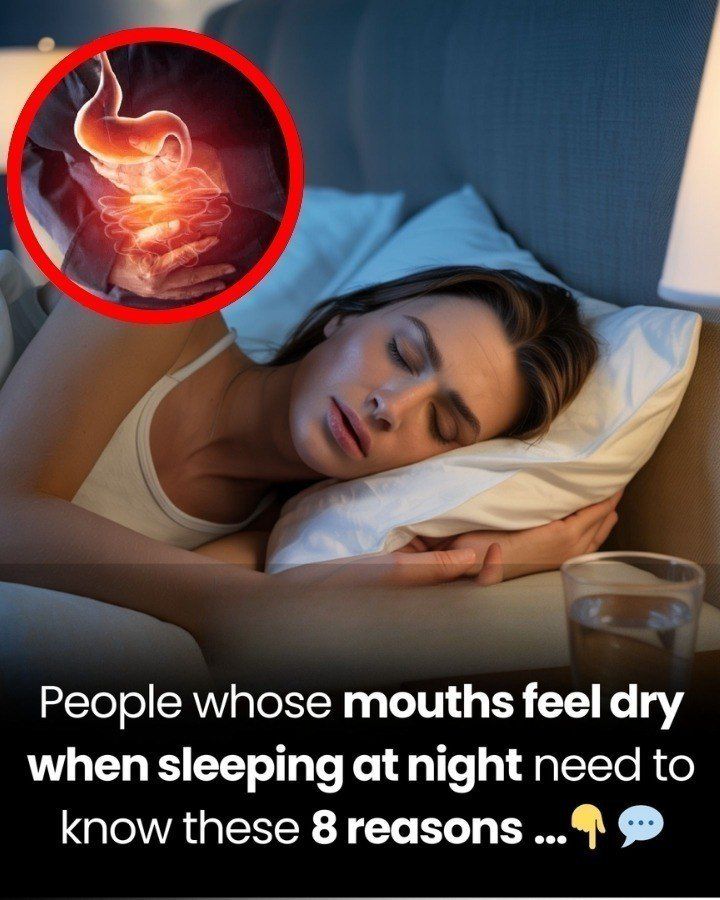
Waking up with a dry mouth at night (also called xerostomia) is very common — but it can have several different causes. Here are 8 reasons people often experience it:
1️⃣ Mouth Breathing
The most common cause.
If you sleep with your mouth open (often from nasal congestion), airflow dries saliva quickly.
Possible triggers:
- Allergies
- Deviated septum
- Chronic sinus congestion
2️⃣ Dehydration
Not drinking enough fluids during the day can reduce saliva production at night.
Signs:
- Dark urine
- Fatigue
- Headaches
3️⃣ Medications
Many medications reduce saliva, including:
- Antihistamines
- Antidepressants
- Blood pressure medications
- Decongestants
- Sleep aids
Dry mouth is one of the most common medication side effects.
4️⃣ Snoring or Sleep Apnea
Obstructive sleep apnea often causes:
- Mouth breathing
- Loud snoring
- Pauses in breathing
- Morning headaches
Chronic nighttime dryness can be an early clue.
5️⃣ Diabetes or Blood Sugar Issues
High blood sugar can cause:
- Excess thirst
- Frequent urination
- Dry mouth
If dryness is persistent and paired with these symptoms, testing may be needed.
6️⃣ Hormonal Changes
Menopause, pregnancy, and other hormonal shifts can affect saliva production.
7️⃣ Salivary Gland Disorders
Less common, but conditions affecting salivary glands can reduce moisture.
8️⃣ Anxiety or Stress
Stress activates the sympathetic nervous system — which decreases saliva production.
⚠️ When to See a Doctor
Seek evaluation if dry mouth is:
- Severe or persistent
- Causing difficulty swallowing
- Associated with mouth sores
- Leading to frequent cavities
- Paired with snoring and daytime fatigue
Simple Things That May Help
✔ Stay well hydrated
✔ Use a humidifier at night
✔ Treat nasal congestion
✔ Avoid alcohol before bed
✔ Chew sugar-free gum during the day to stimulate saliva
✔ Consider a saliva substitute spray if needed
If you’d like, tell me:
- Do you snore?
- Are you on medications?
- Is it every night or occasional?
I can help narrow down the most likely cause.
