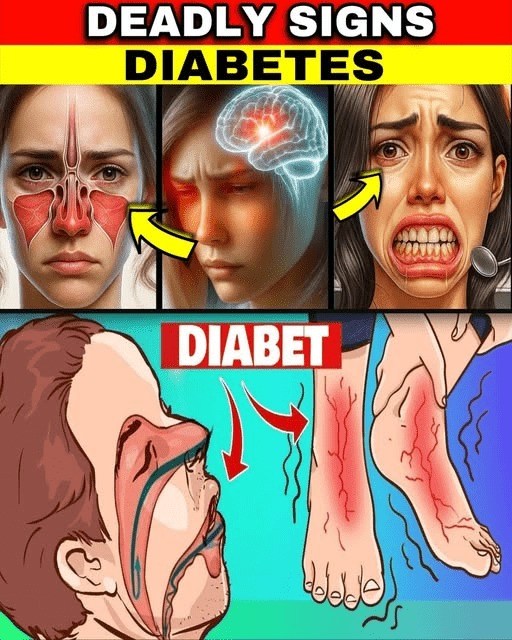
Here are 8 serious warning signs that your body may be struggling because diabetes isn’t well‑controlled — and one life‑saving tip to help prevent these complications. These come from medical research and health‑care authorities like the Mayo Clinic and other health sources. (Mayo Clinic)
🔥 8 Warning Signs Your Body Might Be in Danger from Diabetes
1. Extreme thirst and frequent urination
When blood sugar stays high for long periods, your kidneys work overtime to remove glucose from the blood, pulling water with it — leading to dehydration, persistent thirst, and frequent urination. (Verywell Health)
2. Unexplained weight loss
Even when eating normally, the body can’t use sugar for energy and begins breaking down fat and muscle instead — causing sudden weight loss. (The Times of India)
3. Blurred vision
High glucose levels can cause fluid shifts in the lenses of the eyes, leading to blurred or changing vision. (Verywell Health)
4. Fatigue and weakness
Without enough insulin or proper glucose usage, the body’s cells can’t access energy, leading to persistent tiredness. (The Times of India)
5. Slow‑healing wounds and infections
Poor circulation and immune function from high blood sugar can make cuts, sores, and infections slow to heal — especially on the feet. (Verywell Health)
6. Numbness, tingling, or pain in hands or feet
High blood sugar damages nerves over time (diabetic neuropathy), often starting in the extremities. (Mayo Clinic)
7. Nausea, vomiting, or abdominal pain
These can be signs of dangerously high blood sugar levels and possible metabolic emergencies like diabetic ketoacidosis, which can progress quickly and become life‑threatening. (Mayo Clinic)
8. Fruity‑smelling breath or confusion
These are very serious signs of diabetic ketoacidosis (DKA), where the body produces acidic ketones; this requires urgent medical care because it can lead to coma or death if left untreated. (Mayo Clinic)
❤️ Life‑Saving Tip: Monitor Your Blood Sugar Consistently
Keeping blood sugar within your target range is the most crucial way to prevent severe complications — especially those listed above. That means:
✔ Checking your blood sugar as recommended (daily or multiple times per day)
✔ Taking insulin or diabetes medications exactly as prescribed
✔ Staying hydrated and following your meal plan
✔ Talking to your healthcare team if levels are consistently high or low
Regular monitoring helps you catch dangerous trends early — before they turn into emergencies like DKA or severe dehydration. (Mayo Clinic)
🧠 A Quick Note
These signs often reflect uncontrolled or severely out‑of‑range blood sugar, not early diabetes alone. If you experience any of these especially vomiting, confusion, or fruity breath — seek medical attention immediately. (Mayo Clinic)
If you want, I can tailor this list by type of diabetes (type 1 vs. type 2) or make a simple self‑check symptom checklist you can use at home — just let me know.
