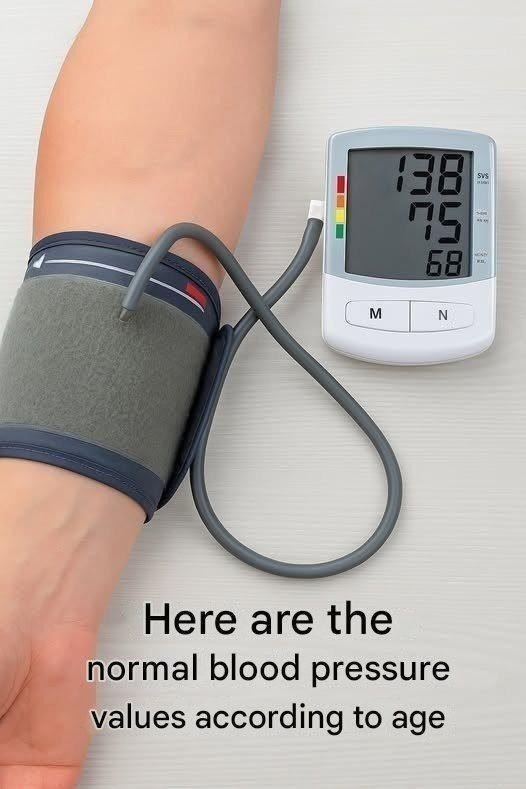
Blood pressure doesn’t officially have “different normal values” for every age group anymore — modern guidelines use the same adult standard, but readings do tend to rise with age.
Here’s how it’s generally classified:
🩺 Normal Blood Pressure Values
👶 Children (approximate ranges vary by height & sex)
Blood pressure in children is based on percentiles, not fixed numbers.
- Normal: Below the 90th percentile for age, height, and sex
- Pediatricians use growth charts to determine this.
🧑 Adults (18+ years)
| Category | Systolic (Top #) | Diastolic (Bottom #) |
|---|---|---|
| Normal | Less than 120 | Less than 80 |
| Elevated | 120–129 | Less than 80 |
| High (Stage 1) | 130–139 | 80–89 |
| High (Stage 2) | 140 or higher | 90 or higher |
| Hypertensive Crisis | 180+ | 120+ |
👵 Does Blood Pressure Change With Age?
While the normal target remains under 120/80, typical averages often look like:
- 20–30 years: ~110–120 / 70–80
- 40–50 years: ~120–130 / 70–85
- 60+ years: Slightly higher systolic (upper number) is common
Some doctors may accept slightly higher systolic values in older adults depending on overall health and fall risk.
⚠️ When to Seek Immediate Care
Call emergency services if blood pressure is:
- 180/120 or higher
- Accompanied by chest pain, shortness of breath, vision changes, confusion, or severe headache
If you’d like, I can also explain:
- What your specific reading means
- How to lower blood pressure naturally
- The difference between systolic and diastolic
- Or how to properly measure blood pressure at home
