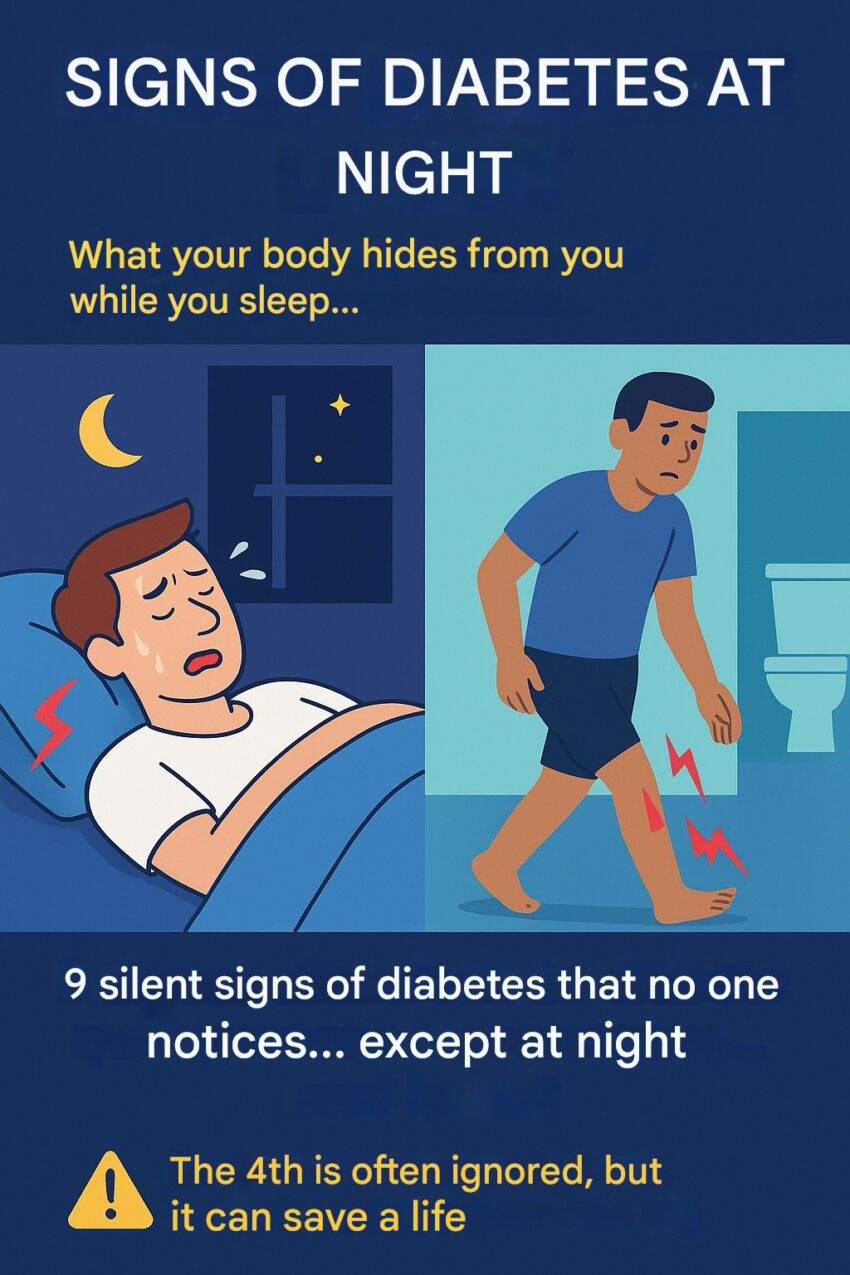
Here’s a clear, patient-friendly breakdown of 9 signs of diabetes that often appear at night, why they happen, and when to take action.
1. Frequent Nighttime Urination (Nocturia)
Waking up multiple times to urinate is one of the most common early signs. High blood sugar makes your kidneys work harder to flush out excess glucose, producing more urine—especially noticeable at night.
2. Excessive Thirst During the Night
If you’re constantly reaching for water at night, it may be due to dehydration from frequent urination. This cycle of thirst → urination → thirst is classic in diabetes.
3. Night Sweats
Low blood sugar (nocturnal hypoglycemia), particularly in people already diagnosed or on diabetes medications, can trigger intense sweating during sleep—sometimes soaking the sheets.
4. Restless or Poor-Quality Sleep
Blood sugar fluctuations can disrupt your nervous system, making it harder to fall asleep or stay asleep. You may wake up feeling unrefreshed even after a full night in bed.
5. Tingling, Burning, or Numbness in Feet or Hands
Known as diabetic neuropathy, nerve damage often becomes more noticeable at night when there are fewer distractions. Many people report burning or pins-and-needles sensations in their feet.
6. Leg Cramps or Aching Legs
Poor circulation and nerve involvement can cause painful leg cramps, especially when lying down. This can repeatedly wake you from sleep.
7. Dry Mouth or Dry Throat at Night
Persistently high blood sugar can reduce saliva production, leading to dry mouth, sore throat, or a sticky feeling that’s worse overnight.
8. Headaches Upon Waking
Nighttime blood sugar highs or lows can cause morning headaches, sometimes accompanied by grogginess or blurred thinking.
9. Snoring or Worsening Sleep Apnea
Diabetes is closely linked with obstructive sleep apnea. Loud snoring, gasping for air, or waking up choking may signal sleep apnea, which in turn worsens blood sugar control.
When to Be Concerned
Occasional symptoms can happen to anyone, but persistent or multiple nighttime signs—especially frequent urination, thirst, and nerve symptoms—deserve medical attention.
Seek medical advice if:
- Symptoms occur most nights
- You have a family history of diabetes
- You’re experiencing unexplained weight loss or fatigue
- You wake up sweating, shaky, or confused
What You Can Do Now
- Track nighttime symptoms for 1–2 weeks
- Reduce sugary or high-carb snacks before bed
- Stay hydrated earlier in the day
- Get a blood sugar test if symptoms persist
If you’d like, I can also:
- Help you distinguish Type 1 vs Type 2 diabetes symptoms
- Explain which nighttime symptoms are most dangerous
- Create a symptom checklist you can bring to a doctor
Just tell me 👍
